Wi-Fi Calling - tested on Google Pixel

Well folks, here it is. Wi-Fi Calling has arrived at Fizz and all of you with a recent Pixel phones running the current Android 17 QPR2 beta 4 can already use it.
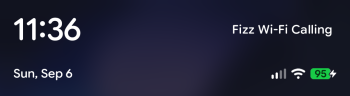
What is very confusing though are the terms & conditions that Fizz is publishing. By now, I'm sure, you've all seen the official Fizz Wi-Fi Calling FAQ here:
https://fizz.ca/en/faq/how-does-wi-fi-calling-work
Which essentially states "The service is available in Canada and the United States with an eligible plan. A Canada/US plan is required when using the service in the United States. The service is not currently available overseas."
The next thing you see are are service terms and conditions:
In the coverage area associated with your Fizz mobile plan, the following billing rules apply:
• Any voice call or text message (including inbound voice calls and text messages) made using the Service within the coverage area associated with your Fizz mobile plan uses part of the cellular network and will therefore be counted in your voice call minutes and text message allocation under your current plan. Outside the coverage area associated with your plan, VoWiFi calls are not included. However, you can make traditional calls with the appropriate Add-ons (e.g., Travel Add-ons, with or without VoWiFi).
• Any use of data by means of the Service constitutes Internet usage and will be charged by your Internet Service Provider. No data usage will be applied to your mobile plan.
Outside the coverage area associated with your plan, the following billing rules apply when you use the Service:
• If you purchase a Travel Add-on for calling minutes in the country where you are located, calls to Canada are included up to the number of minutes purchased with said Travel Add-on. For example: You are in France and you have a Travel Add-on for calling minutes in France, so you can make a call to Canada.
• For calls made between two different countries (other than Canada): This is not possible with a Fizz Travel Add-on.
Not sure who wrote those but they sound suspiciously AI-generated and/or badly translated.
Here is what I found out. Looking through the new Fizz carrier profile on the Pixel, the newly added VoWiFi settings are actually very permissive. VoWiFi is in fact allowed and enabled both on the home network as well as on roaming networks (globally). The preference is to use VoWiFi both at home as well as when roaming, even when suitable cell towers are in range. The user is allowed to change this preference to prefer cell towers over VoWiFi from the Android user interface.
So, Fizz IS one of the good ones 😉
Billing-wise, I could not see any difference based on where I was connecting from. I was always charged as if I was in my plan's coverage area. My plan is Ontario-only and has no unlimited talk or text. So all the charges from the WiFi Calling went through my Fizz wallet. With the phone in airplane mode, location services disabled and no active add-ons, I connected from
• My home Internet connection, geolocating in Ontario (i.e. inside my Fizz coverage area)
• A hotspot generated using cell data of a second Fizz plan, geolocating in Montréal, QC (i.e. outside of my Fizz coverage area, but neither overseas nor in the US)
• A home Internet connection in Europe (i.e. from overseas).
It all worked and charges were always the same and identical to what I would have been charged on the Fizz network in my coverage area, including making calls to international destinations.
I don't know of course, whether Fizz will still bring in any of the restrictions they talk about in their FAQ and service terms. But for the moment at least, tip of the hat to Fizz, this is how Wi-Fi Calling is supposed to work.
Answers
-
Awesome, thanks for sharing
0 -
Thanks for info!
0 -
Thanks for the feedback
0 -
Thanks for the detailed information.
0


